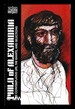
Add this copy of Contemplative Life to cart. $17.83, fair condition, Sold by SELL BOOKS LTD rated 5.0 out of 5 stars, ships from London, LONDON, UNITED KINGDOM, published 1981 by SPCK Publishing.
Choose your shipping method in Checkout. Costs may vary based on destination.
Seller's Description:
Fair. Water damage to book. Please see the condition note after this for details, if this is missing please consider Acceptable to mean poor quality that could include major staining, water damage, writing, missing dustjacket, etc etc. Our books are dispatched from a Yorkshire former cotton mill. We list via barcode/ISBN so please note that the images are stock images and may not be the exact copy you receive, furthermore the details about edition and year might not be accurate as many publishers.
Add this copy of Philo of Alexandria: the Contemplative Life; the Giants to cart. $18.94, very good condition, Sold by MW Books rated 5.0 out of 5 stars, ships from Galway, G, IRELAND, published 1981 by London: SPCK.
Choose your shipping method in Checkout. Costs may vary based on destination.
Seller's Description:
Series; Classics of Western spirituality. Physical description; xxi, 425 pages; 24 cm. Subjects; Philosophy and religion. Mysticism Judaism. Contemplation. Very good paperback copy; cover slightly creased and dulled as with age. Bright and clean internally. Remains well-preserved overall.
Add this copy of The Contemplative Life, Giants and Selections (Classics to cart. $21.00, good condition, Sold by MyLibraryMarket rated 5.0 out of 5 stars, ships from Waynesville, OH, UNITED STATES, published 1980 by Paulist Press.
Add this copy of The Contemplative Life, Giants and Selections to cart. $32.00, like new condition, Sold by Southampton Sag Harbor Books rated 5.0 out of 5 stars, ships from Southampton, NY, UNITED STATES, published 1981 by Paulist Press.
Choose your shipping method in Checkout. Costs may vary based on destination.
Seller's Description:
Like New. First Edition, First Printing. Not price-clipped. Published by Paulist Press, 1981. Octavo. Paperback. Book is like new with very light shelf wear and light sticker residue on the front cover. 100% positive feedback. 30 day money back guarantee. NEXT DAY SHIPPING! Excellent customer service. Please email with any questions. All books packed carefully and ship with free delivery confirmation/tracking. All books come with free bookmarks. Ships from Sag Harbor, New York.
Add this copy of The Contemplative Life, Giants and Selections (Classics to cart. $105.50, new condition, Sold by GridFreed rated 5.0 out of 5 stars, ships from San Diego, CA, UNITED STATES, published 1980 by Paulist Press.
Add this copy of The Contemplative Life, Giants and Selections (Classics to cart. $57.58, new condition, Sold by Just one more Chapter rated 4.0 out of 5 stars, ships from Miramar, FL, UNITED STATES, published 1980 by Paulist Press.
Add this copy of The Contemplative Life, Giants and Selections (Classics to cart. $57.90, good condition, Sold by Bonita rated 4.0 out of 5 stars, ships from Santa Clarita, CA, UNITED STATES, published 1980 by Paulist Press.
Philo of Alexandria (20 B.C. - 50 A.D.) was a Jewish-Greek philosopher to whom I have returned several times over the years. Philo's writing tends toward the dense, prolix, and difficult. For the new reader, it is best to approach him in carefully selected sections, such as the selections included in this anthology, published in 1981 by the Paulist Press as part of its valuable series, "The Classics of Western Spirituality." I have owned this book for years and return to it frequently. For readers who become interested in pursuing Philo in more detail, a single-volume translation of his complete works is readily accessible. The Works of Philo
For all his historical and scholarly importance, I want to explain why I, as a nonspecialist reader, remain fascinated with Philo. Philo lived at about the same time as Jesus, before the destruction of the Second Temple and the creation of Talmudic Judaism. He was deeply familiar with the Greek learning of his day, especially the thought of Plato. Although he was a devoted Jew, Philo probably could not read Hebrew. Instead, he read and expounded the Scriptures in the Greek translation known as the Septuagint.
Philo was among the first thinkers to attempt to combine the best thought of his day with religion. He struggled early with the tensions between secularism and religious faith. It is valuable to me that he came to religion in his secular, Greek language. Philo attempted to use Plato, a philosopher, to effect this reconciliation. His was one of the first attempts to Platonize religion. With his Greek background, residence in Alexandria, and, on occasion, active political life, Philo's religious outlook tended to the internalized and the universal. He did not teach that any single group had sole access to religious truth. Philo's writings are replete with what readers today would describe as mystical or spiritual tendencies. Many of Philo's works are in the nature of exegesis of the first five books (the Torah) of the Hebrew Bible. He endeavored to show how Scriptural teachings were allegorical and philosophical. Thus, Philo was far removed from fundamentalist and literalist readings of Scriptures. Philo's work influenced the early Christians, who were responsible for its preservation, but had little impact on Judaism until about the 16th Century. Normative, Talmudic Judaism followed a path different from Philo's. Today, of course, Jews may read, respect, and learn from Philo. For all that, Philo remains somewhat of an outsider who followed his own path. As with some people today, Philo pursued his own understanding of Judaism in a manner which was not and did not become traditional.
For those wanting to read Philo's own words, this book as an excellent choice. In includes a Preface by John Dillon, a student of middle Platonism, and a detailed introduction by a distinguished student of Philo, David Winston, which centers upon Philo's understanding of religious creation and his mysticism. Winston sees Philo's thought as akin, in many ways, to that of Spinoza's. The book includes copious and highly detailed notes, indexes to the texts, and a bibliography. A cross-section of Philo's works are presented. Two short works are presented in full: The Contemplative Life and The Giants. The former book greatly influenced early Christians. It tells the story of a Jewish ascetic community called the Therapeutae that lived near Philo's Alexandria. Jewish asceticism sometimes receives short shrift, and it is valuable to see what Philo admired in this group. The latter treatise shows Philo applying his allegorical, Platonic reading of Scripture to Genesis 6:1-3 to create what Winston aptly describes as "a beautiful evocation of the spiritual dimension of being." Philo draws a sharp contrast between the way of the flesh and the way of the spirit in his reading of the puzzling Biblical story of how angels of God mated with the daughters of men.
The remainder of the texts in the anthology consist of mostly short sections from Philo's lengthy writings. Each selection is introduced by a short, descriptive heading. The selections are arranged in 13 chapters, ranging from "Autobiographical" to "Universalism and Particularism" with subdivisions. The selections show the range and character of Philo's thought. The chapter headings can be somewhat limiting, as many of the selections cover a number of interrelated themes.
Philo is properly included in a series of works of seminal Western spiritual teachers. This book will appeal to lay readers, more than to scholars, who remain concerned with the broad form of religious questions that Philo explored. The texts reward the effort required to read them. There is value in simply knowing of Philo, and of his efforts to explain and develop his understanding of a spiritual path.