The characterization of materials and phenomena has historically been the principal limitation to the development in each area of science. Once what we are observing is well defined, a theoretical analysis rapidly follows. Modern theories of chemical bonding did not evolve until the methods of analytical chemistry had progressed to a point where the bulk stoichiometry of chemical compounds was firmly established. The great progress made during this century in understanding chemistry has followed directly from the ...
Read More
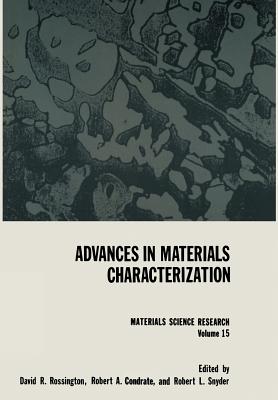
The characterization of materials and phenomena has historically been the principal limitation to the development in each area of science. Once what we are observing is well defined, a theoretical analysis rapidly follows. Modern theories of chemical bonding did not evolve until the methods of analytical chemistry had progressed to a point where the bulk stoichiometry of chemical compounds was firmly established. The great progress made during this century in understanding chemistry has followed directly from the development of an analytical chemistry based on the Dalton assumption of multiple proportions. It has only become apparent in recent years that the extension of our understanding of materials hinges on their non-stoichiometric nature. The world of non-Daltonian chemistry is very poorly understood at present because of our lack of ability to precisely characterize it. The emergence of materials science has only just occurred with our recognition of effects, which have been thought previously to be minor variations from ideality, as the principal phenomena controlling properties. The next step in the historical evolution of materials science must be the development of tools to characterize the often subtle phenomena which determine properties of materials. The various discussions of instrumental techniques presented in this book are excellent summaries for the state-of-the-art of materials characterization at this rather critical stage of materials science. The application of the tools described here, and those yet to be developed, holds the key to the development of this infant into a mature science.
Read Less
Add this copy of Advances in Materials Characterization (Materials to cart. $55.07, good condition, Sold by Bonita rated 4.0 out of 5 stars, ships from Santa Clarita, CA, UNITED STATES, published 1983 by Springer.
Add this copy of Advances in Materials Characterization (Materials to cart. $87.94, new condition, Sold by Just one more Chapter rated 4.0 out of 5 stars, ships from Miramar, FL, UNITED STATES, published 1983 by Springer.
Add this copy of Advances in Materials Characterization to cart. $112.32, new condition, Sold by Ingram Customer Returns Center rated 5.0 out of 5 stars, ships from NV, USA, published 2012 by Springer.
Add this copy of Advances in Materials Characterization to cart. $121.44, new condition, Sold by Educational Media Centre rated 4.0 out of 5 stars, ships from New Delhi, DELHI, INDIA, published 2012 by Springer.
Add this copy of Advances in Materials Characterization to cart. $126.73, new condition, Sold by Basi6 International rated 5.0 out of 5 stars, ships from Irving, TX, UNITED STATES, published 2012 by Springer.