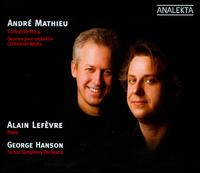
André Mathieu: Concerto No. 4; Orchestral Works (2008)
André Mathieu was a child prodigy at the piano who evolved into one of Canada's most distinctive, original, and universal- sounding composers well before he reached the age of 20. This was followed -- as is typically the case with many prodigies -- by an adulthood marked with mental illness, alcoholism and an early death; moreover, his tragedy was further complicated by the marginalization of Mathieu's music. There was no place for his slightly modern-impacted, unashamedly post-romantic style in an era dominated by formal ...
Read More
André Mathieu was a child prodigy at the piano who evolved into one of Canada's most distinctive, original, and universal- sounding composers well before he reached the age of 20. This was followed -- as is typically the case with many prodigies -- by an adulthood marked with mental illness, alcoholism and an early death; moreover, his tragedy was further complicated by the marginalization of Mathieu's music. There was no place for his slightly modern-impacted, unashamedly post-romantic style in an era dominated by formal procedures, contrived innovations, and the very concept of "international style." The chaos of his later years led to the loss of many Mathieu scores, including the Piano Concerto No. 4 in E minor heard here for the first time since Mathieu himself dropped out of concert life in 1955, performed by Canadian pianist Alain Lefèvre with the Tucson Symphony Orchestra under George Hanson. Mathieu's original score is so long gone that when Lefèvre was handed a bag containing the lacquer disc...
Read Less