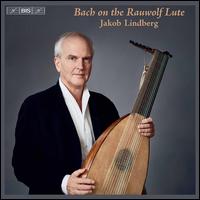
As the album title suggests, the star of the show on this BIS release is the Rauwolf lute. Made around 1590 in Augsburg by Sixtus Rauwolf and modernized in 1725 with the addition of several strings, it is one of the oldest lutes in existence, if not the very oldest, and it is of much more than purely historical interest. It has a rich, resonant sound, and one can easily understand why it was still being played 135 years after it was built and was considered worth upgrading. This is lutenist Jakob Lindberg's second release ...
Read More
As the album title suggests, the star of the show on this BIS release is the Rauwolf lute. Made around 1590 in Augsburg by Sixtus Rauwolf and modernized in 1725 with the addition of several strings, it is one of the oldest lutes in existence, if not the very oldest, and it is of much more than purely historical interest. It has a rich, resonant sound, and one can easily understand why it was still being played 135 years after it was built and was considered worth upgrading. This is lutenist Jakob Lindberg's second release to feature the instrument, and really both are necessary to appreciate its range. However, this collection of Bach works can stand on its own. Two were composed originally for the lute (which Bach did not play) or for the Lautenwerk, an obscure keyboard instrument that imitated the sound of the lute. The real attractions are Lindberg's transcriptions of Bach's suites for solo violin and cello, including the vast Chaconne from the Partita No. 2 for solo violin, BWV 1004. Although Bach...
Read Less