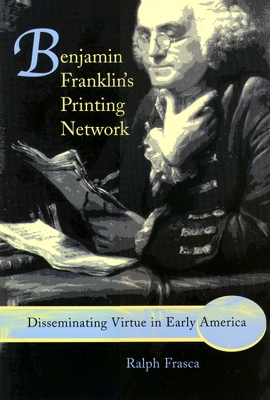
In Benjamin Franklin's Printing Network, Ralph Frasca explores Franklin's partnerships and business relationships with printers and their impact on the early American press. Besides analyzing the structure of the network, Frasca addresses two equally important questions: How did Franklin establish this informal group? What were his motivations for doing so? This network grew to be the most prominent and geographically extensive of the early American printing organizations, lasting from the 1720s until the 1790s. ...
Read More
In Benjamin Franklin's Printing Network, Ralph Frasca explores Franklin's partnerships and business relationships with printers and their impact on the early American press. Besides analyzing the structure of the network, Frasca addresses two equally important questions: How did Franklin establish this informal group? What were his motivations for doing so? This network grew to be the most prominent and geographically extensive of the early American printing organizations, lasting from the 1720s until the 1790s. Stretching from New England to the West Indies, it comprised more than two dozen members, including such memorable characters as the Job-like James Parker, the cunning Francis Childs, the malcontent Benjamin Mecom, the vengeful Benjamin Franklin Bache, the steadfast David Hall, and the deranged Anthony Armbruster. Franklin's network altered practices in both the European and the American colonial printing trades by providing capital and political influence to set up workers as partners and associates. As an economic entity and source of mutual support, the network was integral to the success of many eighteenth-century printers, as well as to the development of American journalism. Frasca argues that one of Franklin's principal motivations in establishing the network was his altruistic desire to assist Americans in their efforts to be virtuous. Using a variety of sources, Frasca shows that Franklin viewed virtue as a path to personal happiness and social utility. Franklin intended for his network of printers to teach virtue and encourage its adoption. The network would disseminate his moral truths to a mass audience, and this would in turn further his own political, economic, and moral ambitions. By exploring Franklin's printing network and addressing these questions, this work fills a substantial void in the historical treatment of Franklin's life. Amateur historians and professional scholars alike will welcome Frasca's clear and capable treatment of this subject.
Read Less
Add this copy of Benjamin Franklin's Printing Network: Disseminating to cart. $106.99, very good condition, Sold by Wonder Book - Member ABAA/ILAB rated 5.0 out of 5 stars, ships from Frederick, MD, UNITED STATES, published 2006 by University of Missouri Press.
Choose your shipping method in Checkout. Costs may vary based on destination.
Seller's Description:
Very Good. Very Good condition. Very Good dust jacket. Volume 1. A copy that may have a few cosmetic defects. May also contain light spine creasing or a few markings such as an owner's name, short gifter's inscription or light stamp.
Add this copy of Benjamin Franklin's Printing Network: Disseminating to cart. $151.03, new condition, Sold by Just one more Chapter rated 4.0 out of 5 stars, ships from Miramar, FL, UNITED STATES, published 2006 by University of Missouri.