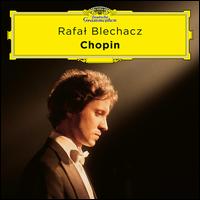
Pianist Rafal Blechacz came on the scene when he made a clean sweep of the prizes at the 2005 International Chopin Competition in Warsaw. He has gone on to record a variety of repertory, but it would seem that Chopin is still closest to his heart. Blechacz has emerged as the arch-Romantic in Deutsche Grammophon's stable, with plenty of power and a fine touch in the big, dramatic gesture. Here, in Chopin's two piano sonatas, he does all that and more: he combines the Romantic pianism with structural insight. In the piano ...
Read More
Pianist Rafal Blechacz came on the scene when he made a clean sweep of the prizes at the 2005 International Chopin Competition in Warsaw. He has gone on to record a variety of repertory, but it would seem that Chopin is still closest to his heart. Blechacz has emerged as the arch-Romantic in Deutsche Grammophon's stable, with plenty of power and a fine touch in the big, dramatic gesture. Here, in Chopin's two piano sonatas, he does all that and more: he combines the Romantic pianism with structural insight. In the piano sonatas, Chopin did not simply slap the sonata label onto sequences of four character pieces; these are true sonatas, with contrasting first and second subjects and a kind of thematic development. Blechacz, in the interview-like notes, alludes to the problem of balancing this Classical element with the stormy Chopin all know and love, and it must be said that his solutions are impressive indeed. One could drop the laser almost anywhere, but consider the famed "Funeral March" from the...
Read Less