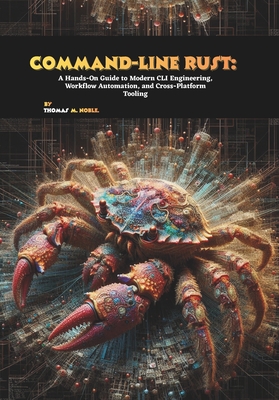
We have all been there. You write a quick automation script in Python. It works perfectly on your machine. Then, you send it to a colleague. "It's crashing," they say. "Did you install the dependencies?" you ask. "I have the wrong version of Python," they reply. The script that was supposed to save time has now wasted your morning. Even worse, when you try to run it on a server, it eats up all the RAM and hangs indefinitely. The tool feels fragile. It feels slow. It feels amateur. Now, imagine a different world. You ...
Read More
We have all been there. You write a quick automation script in Python. It works perfectly on your machine. Then, you send it to a colleague. "It's crashing," they say. "Did you install the dependencies?" you ask. "I have the wrong version of Python," they reply. The script that was supposed to save time has now wasted your morning. Even worse, when you try to run it on a server, it eats up all the RAM and hangs indefinitely. The tool feels fragile. It feels slow. It feels amateur. Now, imagine a different world. You write your logic once. You compile it. You get a single, tiny binary file. You send that file to your colleague, and it just runs . No installation. No version conflicts. It starts instantly, processes thousands of files in parallel using every core on their machine, shows a beautiful progress bar, and handles errors with helpful, color-coded suggestions. This isn't a fantasy; it's the standard for Rust tooling. This book is the bridge that takes you from the frustration of fragile scripting to the confidence of compiled engineering. What's Inside This hands-on guide takes you through eight comprehensive chapters: Architecting for Growth: Learn to separate your binary and library code for maximum testability (Chapter 1). Designing the Experience: Implement beautiful, colored output and interactive menus that guide your users (Chapter 2). The Layered Config Strategy: Build a robust configuration system that prioritizes flags, environment variables, and config files automatically (Chapter 3). High-Performance I/O: Master buffered reading and recursive directory walking to scan gigabytes of data in seconds (Chapter 4). Process Orchestration: Spawn, control, and pipe data between external tools like Git and Docker safely (Chapter 5). Concurrency & Parallelism: Learn exactly when to use Tokio for network tasks and Rayon for CPU tasks to unlock blazing speeds (Chapter 6). Quality Assurance: Set up a rigorous testing pipeline with mocks and GitHub Actions CI to prevent regressions (Chapter 7). Global Distribution: Cross-compile static binaries for Windows, Linux, and macOS, and publish them to Homebrew and Crates.io (Chapter 8). Who It's Meant For DevOps Engineers tired of maintaining brittle Bash or Python scripts. Backend Developers looking to build internal tooling that their team will actually enjoy using. Rust Beginners who have learned the syntax but need a practical project to master the ecosystem. Software Engineers who want to understand the difference between synchronous, asynchronous, and parallel programming in a real-world context. Stop settling for "good enough" scripts. Your tools should be as robust as your production code. Whether you are automating a simple backup or orchestrating a complex cloud deployment, Rust gives you the power to do it faster and safer. Pick up "Command-Line Rust" today and start engineering tools that last.
Read Less
Add this copy of Command-Line Rust: A Hands-On Guide to Modern CLI to cart. $29.92, new condition, Sold by Ingram Customer Returns Center rated 5.0 out of 5 stars, ships from NV, USA, published 2025 by Independently Published.