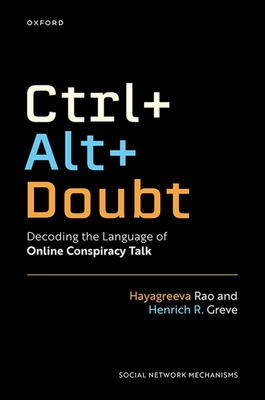
Conspiracy theories are as old as society^--^but never have they spread so fast or so visibly. In an age of social media, moments of crisis and conflict ignite waves of conspiratorial storytelling that reshape how people interpret events, assign blame, and mobilize action. By foregrounding language and interaction, Ctrl+Alt+Doubt bridges cultural sociology, computational linguistics, and diffusion theory^--^offering a powerful framework for understanding how conspiracy theories spread and how interventions might be ...
Read More
Conspiracy theories are as old as society^--^but never have they spread so fast or so visibly. In an age of social media, moments of crisis and conflict ignite waves of conspiratorial storytelling that reshape how people interpret events, assign blame, and mobilize action. By foregrounding language and interaction, Ctrl+Alt+Doubt bridges cultural sociology, computational linguistics, and diffusion theory^--^offering a powerful framework for understanding how conspiracy theories spread and how interventions might be designed to blunt their social harm.
Read Less