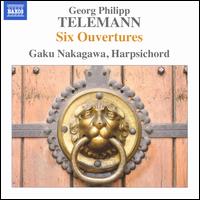
These "ouvertures" of Telemann, published in the 1740s, are characterized by the formal experimentation common in his later years; they are not overtures to anything, but three-movement works that contain a movement called Ouverture, a slow introduction in the French style. But these opening Ouvertures themselves are formally adventurous: divided into multiple sections, containing polyphonic passages, shifting in tempo, entering unusual harmonic realms, or what have you. The middle movements are marked with a tempo movement ...
Read More
These "ouvertures" of Telemann, published in the 1740s, are characterized by the formal experimentation common in his later years; they are not overtures to anything, but three-movement works that contain a movement called Ouverture, a slow introduction in the French style. But these opening Ouvertures themselves are formally adventurous: divided into multiple sections, containing polyphonic passages, shifting in tempo, entering unusual harmonic realms, or what have you. The middle movements are marked with a tempo movement and the words "e scherzando," one of the earlier uses of this term ("joking") as a descriptive adjective, and the finales are mostly brilliant. The young Japanese harpsichordist Gako Nakagawa deserves credit for bringing these works to light. Nakagawa is an autodidact who is said to have won a top Japanese prize without ever having taken a lesson on a historical keyboard instrument. Such a background tends to suggest a somewhat idiosyncratic style, and so it is with Nakagawa; a bit...
Read Less
Add this copy of Telemann: Six Overtures for Harpsichord to cart. $32.88, new condition, Sold by newtownvideo rated 4.0 out of 5 stars, ships from huntingdon valley, PA, UNITED STATES, published 2018 by Naxos.