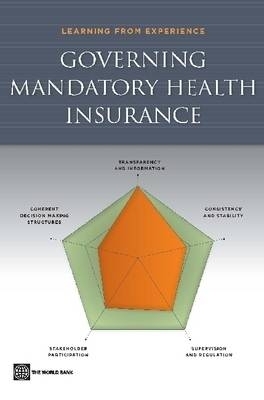
Although mandatory health insurance programs are being proposed or expanded in many developing countries, relatively little attention has been given to how these programs are governed. The available literature focuses almost exclusively on operational features that are important but will necessarily change over timeOCosuch as eligibility, benefit packages, and premiums. Governing Mandatory Health Insurance instead looks at the institutional and political forces that affect the behavior of such programs within their social ...
Read More
Although mandatory health insurance programs are being proposed or expanded in many developing countries, relatively little attention has been given to how these programs are governed. The available literature focuses almost exclusively on operational features that are important but will necessarily change over timeOCosuch as eligibility, benefit packages, and premiums. Governing Mandatory Health Insurance instead looks at the institutional and political forces that affect the behavior of such programs within their social and historical contexts and how five dimensions of governanceOCocoherent decision-making structures, stakeholder participation, transparency and information, supervision and regulation, and consistency and stabilityOCocan influence the long-term performance of health insurance programs in terms of coverage, financial protection, efficiency, and sustainability. Governing Mandatory Health Insurance addresses these issues by drawing on the experiences of four countriesOCoChile, Costa Rica, Estonia, and the Netherlands. It shows how governance works in these countries and extracts lessons for developing countries with mandatory health insurance programs, focusing on the mechanisms for assuring solvency, financial protection, and health care services of good quality."
Read Less
Add this copy of Governing Mandatory Health Insurance: Learning From to cart. $39.27, good condition, Sold by Bonita rated 4.0 out of 5 stars, ships from Santa Clarita, CA, UNITED STATES, published 2008 by World Bank Publications.