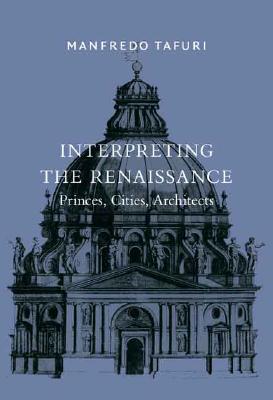
Manfredo Tafuri (1935-1994) is acknowledged as one of Italy's most influential architectural historians. In his final work, "Interpreting the Renaissance," published here in English for the first time (the Italian edition, "Ricerca del Rinascimento," appeared in 1992), Tafuri analyzes Renaissance architecture from a variety of perspectives, exploring questions that occupied him for over thirty years. What theoretical terms were used to describe the humanist analogy between architecture and language? Is it possible to ...
Read More
Manfredo Tafuri (1935-1994) is acknowledged as one of Italy's most influential architectural historians. In his final work, "Interpreting the Renaissance," published here in English for the first time (the Italian edition, "Ricerca del Rinascimento," appeared in 1992), Tafuri analyzes Renaissance architecture from a variety of perspectives, exploring questions that occupied him for over thirty years. What theoretical terms were used to describe the humanist analogy between architecture and language? Is it possible to identify the political motivations behind the period's new urban strategies? And how does humanism embody both an attachment to tradition and an urge to experiment? Tafuri studies the theory and practice of Renaissance architecture, offering new and compelling readings of its various social, intellectual and cultural contexts, while providing a broad understanding of uses of representation that shaped the entire era. He synthesizes the history of architectural ideas and projects through discussions of the great centers of architectural innovation in Italy (Florence, Rome, and Venice), key patrons from the middle of the fifteenth century (Pope Nicholas V) to the early sixteenth century (Pope Leo X), and crucial figures such as Leon Battista Alberti, Filippo Brunelleschi, Lorenzo de' Medici, Raphael, Baldassare Castiglione, and Giulio Romano. A magnum opus by one of Europe's finest scholars, "Interpreting the Renaissance" is an essential book for anyone interested in the architecture and culture of fifteenth- and sixteenth-century Italy.
Read Less
Add this copy of Interpreting the Renaissance: Princes, Cities, to cart. $78.50, fair condition, Sold by ClickGoodwill rated 5.0 out of 5 stars, ships from Indianapolis, IN, UNITED STATES, published 2006 by Yale University Press.
Choose your shipping method in Checkout. Costs may vary based on destination.
Seller's Description:
Fair. Used-Acceptable: All pages and the cover are intact but shrink wrap dust covers or boxed set case may be missing. Pages may include limited notes highlighting or minor water damage but the text is readable. Item may be missing bundled media.
Add this copy of Interpreting the Renaissance: Princes, Cities, to cart. $92.00, very good condition, Sold by Arches Bookhouse rated 5.0 out of 5 stars, ships from Portland, OR, UNITED STATES, published 2006 by Yale University Press.
Choose your shipping method in Checkout. Costs may vary based on destination.
Seller's Description:
VERY GOOD in Very Good jacket. 408pp. Sewn binding in cloth, gilt spine lettering. Ex-library; exceedingly clean and sharp with sound binding and no evidence of use. Shipped professionally in a box. 'Manfredo Tafuri (1935-1994) is acknowledged as one of Italy's most influential architectural historians. In his final work, Interpreting the Renaissance, published here in English for the first time (the Italian edition, Ricerca del Rinascimento, appeared in 1992), Tafuri analyzes Renaissance architecture from a variety of perspectives, exploring questions that occupied him for over thirty years. What theoretical terms were used to describe the humanist analogy between architecture and language? Is it possible to identify the political motivations behind the period's new urban strategies? And how does humanism embody both an attachment to tradition and an urge to experiment? Tafuri studies the theory and practice of Renaissance architecture, offering new and compelling readings of its various social, intellectual and cultural contexts, while providing a broad understanding of uses of representation that shaped the entire era. He synthesizes the history of architectural ideas and projects through discussions of the great centers of architectural innovation in Italy (Florence, Rome, and Venice), key patrons from the middle of the fifteenth century (Pope Nicholas V) to the early sixteenth century (Pope Leo X), and crucial figures such as Leon Battista Alberti, Filippo Brunelleschi, Lorenzo de' Medici, Raphael, Baldassare Castiglione, and Giulio Romano. A magnum opus by one of Europe's finest scholars, Interpreting the Renaissance is an essential book for anyone interested in the architecture and culture of fifteenth-and sixteenth-century Italy. ' (Publisher's blurb).
Add this copy of Interpreting the Renaissance: Princes, Cities, to cart. $162.79, new condition, Sold by GridFreed rated 5.0 out of 5 stars, ships from San Diego, CA, UNITED STATES, published 2006 by Yale University Press.
Add this copy of Interpreting the Renaissance: Princes, Cities, to cart. $187.00, very good condition, Sold by Midway Book Store rated 5.0 out of 5 stars, ships from Saint Paul, MN, UNITED STATES, published 2006 by Yale University Press.
Choose your shipping method in Checkout. Costs may vary based on destination.
Seller's Description:
VG+/VG++ Octavo. 10.25" x 7.25" 408pp. This is a gorgeous book with a lot of un-numbered pages with the illustrations. Book is in Very Good+ condition with a dent on the upper left back corner. Dust Jacket is also Very Good+, withminor rubbing on the back cover. Overall, a beautiful copy that is almost Near Fine, but not quite.
Add this copy of Interpreting the Renaissance: Princes, Cities, to cart. $226.95, very good condition, Sold by Flamingo Books rated 5.0 out of 5 stars, ships from Menifee, CA, UNITED STATES, published 2006 by Yale University Press.
Choose your shipping method in Checkout. Costs may vary based on destination.
Seller's Description:
Very Good in Very Good jacket. 2006 first edition Yale University Press (New Haven, Connecticut), 7 1/2 x 10 3/8 inches tall hardcover in publisher's unclipped dust jacket, beige paper-covered boards over blue cloth gilt-lettered spine, pale blue endpapers, copiously illustrated with black-and-white photographs and drawings, xxxi, 408 pp. plus 128 un-numbered pages of plates. Very slight edgewear to covers, with minor bumping to the lower tips of both front and rear cover. On the top margin of the blank front free-endpaper, a two-inch spot with slight paper residue where a label was removed. Otherwise, a very good copy-clean, bright and unmarked-in a very good dust jacket which is nicely preserved and displayed in a clear archival Brodart sleeve. Note that this is a heavy and oversized book, so additional postage will be required for international or priority orders. ~KK~ [4.0P] Manfredo Tafuri (1935-1994) is acknowledged as one of Italy's most influential architectural historians. In his final work, Interpreting the Renaissance, published here in English (the Italian edition, Ricerca del Rinascimento, appeared in 1992), Tafuri analyzes Renaissance architecture from a variety of perspectives, exploring questions that occupied him for over thirty years. What theoretical terms were used to describe the humanist analogy between architecture and language? Is it possible to identify the political motivations behind the period's new urban strategies? And how does humanism embody both an attachment to tradition and an urge to experiment? Tafuri studies the theory and practice of Renaissance architecture, offering new and compelling readings of its various social, intellectual and cultural contexts, while providing a broad understanding of uses of representation that shaped the entire era. He synthesizes the history of architectural ideas and projects through discussions of the great centers of architectural innovation in Italy (Florence, Rome, and Venice), key patrons from the middle of the fifteenth century (Pope Nicholas V) to the early sixteenth century (Pope Leo X), and crucial figures such as Leon Battista Alberti, Filippo Brunelleschi, Lorenzo de' Medici, Raphael, Baldassare Castiglione, and Giulio Romano. A magnum opus by one of Europe's finest scholars, Interpreting the Renaissance is an essential book for anyone interested in the architecture and culture of fifteenth-and sixteenth-century Italy.
Add this copy of Interpreting the Renaissance: Princes, Cities, to cart. $107.00, very good condition, Sold by Grey Matter Books rated 4.0 out of 5 stars, ships from Hadley, MA, UNITED STATES, published 2006 by Yale University Press.
Choose your shipping method in Checkout. Costs may vary based on destination.
Seller's Description:
Very Good in Very Good jacket. Text is unmarked; pages are bright. Binding is sturdy and square. Dust jacket shows very little wear. International/Priority shipping at cost.
Add this copy of Interpreting the Renaissance: Princes, Cities, to cart. $133.21, good condition, Sold by Bonita rated 4.0 out of 5 stars, ships from Santa Clarita, CA, UNITED STATES, published 2006 by Yale University Press.
Add this copy of Interpreting the Renaissance: Princes, Cities, to cart. $182.79, new condition, Sold by Just one more Chapter rated 4.0 out of 5 stars, ships from Miramar, FL, UNITED STATES, published 2006 by Yale University Press.
Add this copy of Interpreting the Renaissance; Princes, Cities, to cart. $269.50, like new condition, Sold by James & Mary Laurie Bookseller rated 4.0 out of 5 stars, ships from Minneapolis, MN, UNITED STATES, published 2006 by Yale University Press.
Choose your shipping method in Checkout. Costs may vary based on destination.
Seller's Description:
Fine in fine jacket. Bound in publisher's original blue quarter cloth with spine stamped in gilt. 166 black-and-white illustrations. 7 x 10 inches. 408 pages.