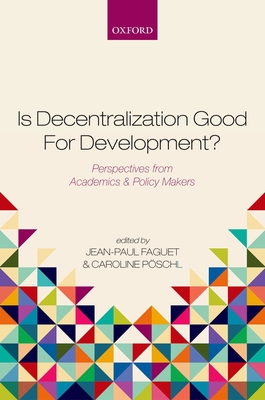
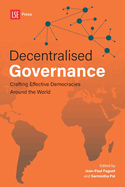
Is decentralisation good for development? This book offers insights and lessons that help us understand when the answer is 'Yes', and when it is No'. It shows us how decentralisation can be designed to drive development forward, and focuses attention on how institutional incentives can be created for governments to improve public sector performance and strengthen economies in ways that enhance citizen well-being. It also draws attention to the political motives behind decentralisation reforms and how these shape the ... Read More
Is decentralisation good for development? This book offers insights and lessons that help us understand when the answer is 'Yes', and when it is No'. It shows us how decentralisation can be designed to drive development forward, and focuses attention on how institutional incentives can be created for governments to improve public sector performance and strengthen economies in ways that enhance citizen well-being. It also draws attention to the political motives behind decentralisation reforms and how these shape the institutions that result. This book brings together academics working at the frontier of research on decentralization with policymakers who have implemented reform at the highest levels of government and international organizations. Its purpose is to marry policymakers' detailed knowledge and insights about real reform processes with academics' conceptual clarity and analytical rigor. This synthesis naturally shifts the analysis towards deeper questions of decentralization, stability, and the strength of the state. These are explored in Part 1, with deep studies of the effects of reform on state capacity, political and fiscal stability, and democratic inclusiveness in Bolivia, Pakistan, India, and Latin America more broadly. These complex questions - crucially important to policymakers but difficult to address with statistics - yield before a multipronged attack of quantitative and qualitative evidence combined with deep practitioner insight. How should reformers design decentralisation? Part 2 examines these issues with evidence from four decades of reform in developing and developed countries. What happens after reform is implemented? Decentralization and local service provision turns to decentralization's effects on health and education services, anti-poverty programs with original evidence from 12 countries across Africa, Asia, and Latin America. Read Less
Add this copy of Is Decentralization Good for Development? : to cart. $61.01, good condition, Sold by Phatpocket Limited rated 5.0 out of 5 stars, ships from Waltham Abbey, ESSEX, UNITED KINGDOM, published 2015 by Oxford University Press.
Choose your shipping method in Checkout. Costs may vary based on destination.
Seller's Description:
Good. Ships from UK in 48 hours or less (usually same day). Your purchase helps support Sri Lankan Children's Charity 'The Rainbow Centre'. Ex-library, so some stamps and wear, but in good overall condition. 100% money back guarantee. We are a world class secondhand bookstore based in Hertfordshire, United Kingdom and specialize in high quality textbooks across an enormous variety of subjects. We aim to provide a vast range of textbooks, rare and collectible books at a great price. Our donations to The Rainbow Centre have helped provide an education and a safe haven to hundreds of children who live in appalling conditions. We provide a 100% money back guarantee and are dedicated to providing our customers with the highest standards of service in the bookselling industry.
Add this copy of Is Decentralization Good for Development? : to cart. $222.80, good condition, Sold by Bonita rated 4.0 out of 5 stars, ships from Santa Clarita, CA, UNITED STATES, published 2015 by Oxford University Press.
Add this copy of Is Decentralization Good For Development?: Perspectives to cart. $237.70, new condition, Sold by Booksplease rated 4.0 out of 5 stars, ships from Southport, MERSEYSIDE, UNITED KINGDOM, published 2015 by Oxford University Press.