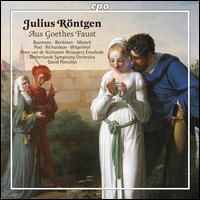
German composer Julius Röntgen (1855-1932) is an exemplary case of a composer who persevered in the face of discouragement. He received little encouragement for his colleagues, and even his most supportive friends, Brahms and Grieg, were stingy in their praise, citing his lack of a distinctly original vision. But good for Röntgen, who refused to be a victim of the prevailing Romantic European artistic opinion that only genius deserved to be encouraged and supported; he went on to have a remarkably productive career that may ...
Read More
German composer Julius Röntgen (1855-1932) is an exemplary case of a composer who persevered in the face of discouragement. He received little encouragement for his colleagues, and even his most supportive friends, Brahms and Grieg, were stingy in their praise, citing his lack of a distinctly original vision. But good for Röntgen, who refused to be a victim of the prevailing Romantic European artistic opinion that only genius deserved to be encouraged and supported; he went on to have a remarkably productive career that may not have brought him fame and huge fortune, but which kept him happily engaged in doing what he loved most -- composing and performing. He was a devoted Brahmsian, and his "Aus Goethes Faust," an oratorio for soloists, organ, and orchestra, sounds for the most part like it could have been written in the last few decades of the nineteenth century or the first decade of the twentieth. (He was also a remarkable speedy composer -- he wrote all but one movement of the hour-long piece in...
Read Less
Add this copy of Rontgen: Aus Goethes Faust to cart. $30.47, new condition, Sold by newtownvideo rated 4.0 out of 5 stars, ships from huntingdon valley, PA, UNITED STATES, published 2008 by CPO.