The relationship between politics and mass media has existed since the inception of the notion of state. It is a complex, often fraught, relationship, in which audiences, discursive actors, and agendas shift frequently. Mass media provides a dual function when it comes to political issues. Some articles featured in this book will deal with the traditional relationships between politics and mass media, including propaganda, expose, and hegemony. Traditional top down media, such as newspapers and television broadcasts, inform ...
Read More
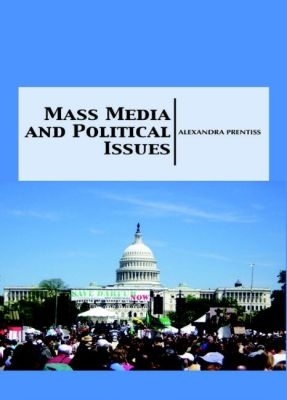
The relationship between politics and mass media has existed since the inception of the notion of state. It is a complex, often fraught, relationship, in which audiences, discursive actors, and agendas shift frequently. Mass media provides a dual function when it comes to political issues. Some articles featured in this book will deal with the traditional relationships between politics and mass media, including propaganda, expose, and hegemony. Traditional top down media, such as newspapers and television broadcasts, inform the populace of what is occurring in politics; the newer forms of citizen-generated platforms, such as social media, can also inform the politicians of their constituents' concerns. Here, we will be examining these dual roles: how the media shape citizens' attitudes and behaviors in relation to politics, and also how citizens are in turn able to influence the political process in new, and sometimes revolutionary, ways. Different aspects of the interplay between audience and politics, including agenda setting, and targeting demographics will be highlighted in several case studies. No consideration of the relationship between politics and mass media is complete with???out a discussion of the use of mass media as propaganda, or a tool of manipulation, by politicians, as "Mass media's manipulative potential in political discourse" will illuminate. The use of the Internet and mass media for propagation of ideas and propaganda is not limited to intra-national contexts, but is also relevant on the geopolitical level, as "Information warfare technologies in political discourse" shows. Nations have their own agendas on the world stage, even when it comes to seemingly non-political events like the Olympics, which will be investigated in "The Interference of Politics in the Olympic Games, and How the US Media Contribute to It." New media enables new ways of agenda-setting, as discourse analysis reveals in "Internet Aggregators Constructing the Political Right Wing in Japan." The misrepresentation of distant events can have a direct effect on how audiences perceive those events, and thus on how policy is shaped, as evidenced by "Misrepresentation of the Bosnian War by Western media." Nowhere has mass media been more instrumental in shaping public opinion than in cases of political corruption. The relationship between news coverage and political corrup???tion in Western democracies will be considered in the article, "Journalistic coverage of political and financial crises and the "issue" of political corruption." On the flip side of the exposure of political corruption by objective news sources is the role of state-owned media in promoting the political elite's agenda, as discussed in "Reshaping the Hegemony: State-Owned Media in Egypt after the Revolution." Is social media a legitimate sphere for public discourse? Several of the articles in this book will pose this question. In keeping with the objective of looking at the interplay between politics and mass media, case studies will demonstrate how social media has affected how politicians disseminate information, as well as how citizens discuss politics and interact with government. To provide perspectives on how politicians communicate with constituents, several recent elections in different countries will be discussed. "Negotiating the Political Self on Social Media Platforms: An In-Depth Study of Image-Management in an Election-Campaign in a Multi-Party Democracy" looks at a Swedish parliamentarian's use of social media in the 2010 elections, in conjunction with a communications agency, examines how was she able to monitor her self-presentation via this new conduit. In interviews with a number of European Union parliamentary assistants, "Politician 2.0: Behavior and Dissemination on Social Networking Sites-Gaps and Best-Practices" delves into how and why politicians use social media to present information and monitor their profiles. "Political Communicat
Read Less
Add this copy of Mass Media and Political Issues to cart. $100.54, new condition, Sold by Basi6 International rated 5.0 out of 5 stars, ships from Irving, TX, UNITED STATES, published 2016 by Arcler Education Inc.
Add this copy of Mass Media and Political Issues to cart. $101.17, new condition, Sold by discount_scientific_books rated 5.0 out of 5 stars, ships from Sterling Heights, MI, UNITED STATES, published 2016 by Arcler Education Inc.
Add this copy of Mass Media and Political Issues to cart. $101.54, new condition, Sold by Basi6 International rated 5.0 out of 5 stars, ships from Irving, TX, UNITED STATES, published 2016 by Arcler Education Inc.
Add this copy of Mass Media and Political Issues to cart. $87.58, new condition, Sold by Educational Media Centre rated 4.0 out of 5 stars, ships from New Delhi, DELHI, INDIA, published 2016 by Arcler Education Inc.
Add this copy of Mass Media and Political Issues to cart. $87.73, new condition, Sold by Educational Media Centre rated 4.0 out of 5 stars, ships from New Delhi, DELHI, INDIA, published 2016 by Arcler Education Inc.
Add this copy of Mass Media and Political Issues to cart. $87.78, new condition, Sold by Educational Media Centre rated 4.0 out of 5 stars, ships from New Delhi, DELHI, INDIA, published 2016 by Arcler Education Inc.