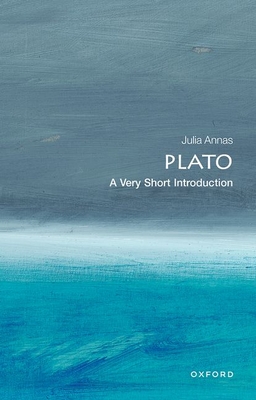
This lively and accessible book focuses on the philosophy and argument of Plato's writings, drawing the reader into Plato's way of doing philosophy and the general themes of his thinking. It discusses Plato's style of writing: his use of the dialogue form, his use of what we today call fiction, and his philosophical transformation of myths. It also looks at his discussions of love and philosophy, his attitude towards women, and towards homosexual love. It explores Plato's claim that virtue is sufficient for happiness and ...
Read More
This lively and accessible book focuses on the philosophy and argument of Plato's writings, drawing the reader into Plato's way of doing philosophy and the general themes of his thinking. It discusses Plato's style of writing: his use of the dialogue form, his use of what we today call fiction, and his philosophical transformation of myths. It also looks at his discussions of love and philosophy, his attitude towards women, and towards homosexual love. It explores Plato's claim that virtue is sufficient for happiness and touches on his arguments for the immorality of the soul and his ideas about the nature of the universe.
Read Less
Add this copy of Plato: a Very Short Introduction (Very Short to cart. $63.85, good condition, Sold by Bonita rated 4.0 out of 5 stars, ships from Santa Clarita, CA, UNITED STATES, published 2021 by Blackstone Pub.
Add this copy of Plato: a Very Short Introduction (Very Short to cart. $78.18, good condition, Sold by Bonita rated 4.0 out of 5 stars, ships from Santa Clarita, CA, UNITED STATES, published 2021 by Blackstone Pub.
Add this copy of Plato: a Very Short Introduction (Very Short to cart. $88.34, new condition, Sold by Just one more Chapter rated 4.0 out of 5 stars, ships from Miramar, FL, UNITED STATES, published 2021 by Blackstone Pub.
Add this copy of Plato: a Very Short Introduction (Very Short to cart. $104.33, new condition, Sold by Just one more Chapter rated 4.0 out of 5 stars, ships from Miramar, FL, UNITED STATES, published 2021 by Blackstone Pub.
Add this copy of Plato-a Very Short Introduction-English-Chinese Edition to cart. $32.46, very good condition, Sold by Daedalus Books rated 4.0 out of 5 stars, ships from Portland, OR, UNITED STATES, published 2007 by Foreign Language Teaching and Researching Press.
Edition:
2007, Foreign Language Teaching and Researching Press
Add this copy of Plato: A Very Short Introduction to cart. $11.47, new condition, Sold by GreatBookPricesUK5 rated 5.0 out of 5 stars, ships from Castle Donington, DERBYSHIRE, UNITED KINGDOM, published 2003 by Oxford University Press.
Choose your shipping method in Checkout. Costs may vary based on destination.
Seller's Description:
New. Trade paperback (US). Glued binding. 128 p. Contains: Illustrations. Very Short Introductions, 79. In Stock. 100% Money Back Guarantee. Brand New, Perfect Condition, allow 4-14 business days for standard shipping. To Alaska, Hawaii, U.S. protectorate, P.O. box, and APO/FPO addresses allow 4-28 business days for Standard shipping. No expedited shipping. All orders placed with expedited shipping will be cancelled. Over 3, 000, 000 happy customers.
Add this copy of Plato: A Very Short Introduction to cart. $11.48, new condition, Sold by Ria Christie Books rated 5.0 out of 5 stars, ships from Uxbridge, MIDDLESEX, UNITED KINGDOM, published 2003 by Oxford University Press.
Add this copy of Plato Vsi Very Short Introduction to cart. $16.25, new condition, Sold by indoo rated 5.0 out of 5 stars, ships from Avenel, NJ, UNITED STATES, published 2003 by Oxford University Press.
Add this copy of Plato: A Very Short Introduction to cart. $16.63, new condition, Sold by GreatBookPrices rated 4.0 out of 5 stars, ships from Columbia, MD, UNITED STATES, published 2003 by Oxford University Press.
Choose your shipping method in Checkout. Costs may vary based on destination.
Seller's Description:
New. Trade paperback (US). Glued binding. 128 p. Contains: Illustrations. Very Short Introductions, 79. In Stock. 100% Money Back Guarantee. Brand New, Perfect Condition, allow 4-14 business days for standard shipping. To Alaska, Hawaii, U.S. protectorate, P.O. box, and APO/FPO addresses allow 4-28 business days for Standard shipping. No expedited shipping. All orders placed with expedited shipping will be cancelled. Over 3, 000, 000 happy customers.
Many years ago I was an undergraduate philosophy major and took my first course in Ancient Philosophy from a teacher I have always remembered. The class gave me my first academic exposure to Plato. I was deeply moved, as many of Plato's young readers have been over the centuries. My teacher encouraged my interest and suggested a study of Ancient Greek if I wanted to do serious work. I did in fact study Greek for two years. My dreams of graduate work in philosophy, of further serious study of Plato, and of an academic teaching career did not materialize. I continued to think about Plato and philosophy over the years, both while working and in retirement.
Written as part of the Very Short Introduction series of Oxford University Press, "Plato: a Very Short Introduction" (2003) brought back memories of my study of Plato, of my love for the study, and of philosophy. The author, Julia Annas, is Regents Professor of Philosophy at the University. She has published widely on Ancient Philosophy and on Plato. The VSI series offers "concise and original introductions" to a broad range of subjects. I have learned a great deal from books in the series on subjects both unfamiliar to me and familiar, such as the thought of Plato.
It is odd because I picked up this short introduction and immediately was hooked. Annas begins in medias res with the nature of knowledge in a chapter titled 'Arguing with Plato" She explores Plato's dialogue "Theaetetus", the first of Plato's dialogues I wrote about in college. Knowledge for Plato involves recollection and Annas helped me recollect. She also, within a few pages of an introductory book taught me something new. She taught me again when, later in the book, she discusses Plato's "Timaeus" and pointed out some of the consequences of the difference between Plato's God and the Jewish-Christian-Islamic God that I hadn't sufficiently noticed.
Still, this book largely brought back memories of issues and things that I knew, as Annas discusses Plato's theory of knowledge, the importance of his dialogical presentation, his relationship to Socrates, his views of love, sex, and gender (the latter at too great length and somewhat polemically), the nature of individual and social virtue, the soul, and, at last the theory of forms. These are matters for a book many times the size of this VSI, but the discussion brought me back to thinking about Plato.
As Annas stresses, Plato has been read many different ways over the centuries and still is today. His works are endlessly deep and fascinating. Broadly, some readers see Plato as teaching no substantive doctrine himself but rather working to instill a love of and search for truth in his readers. Others see Plato as offering strongly substantive positions on many matters. And, of course, there are many possible ways of combining both positions. Annas describes Plato, rightly so, as the first professional philosopher. Plato wrote, at the least, to make his readers think and to understand that the philosophical search differed from other forms of knowledge and that it was worth exploring and pursuing. It involved, perhaps, a search for meaning and for truth, in addition to Plato's own efforts at substantive teaching.
The goal of Annas's book is not to give a detailed summary of Plato but instead to persuade readers to study him further. She writes early in her study:
"What is difficult and also rewarding to bear in mind about Plato is that he is intensely concerned both with argument and with bold ideas. in a way that is subtle and hard to capture without simplification. This introduction to Plato does no pretend either to cover all of Plato's ideas, or to provide a recipe for interpreting him. but rather aims to introduce you to engagement with Plato in a way that will, I hope, lead you to persist."
She concludes with the following observation: "For in the end [Plato's] deepest message is not that we should believe in Forms, or in the importance of virtue, but that we should engage with him, and with our own contemporaries, in aspiring to understand these matters."
This was, for me, a highly moving book. It brought Plato back to me and reminded me of the love of philosophical thinking which, I hope, has stayed with me even though my career path took a different direction.