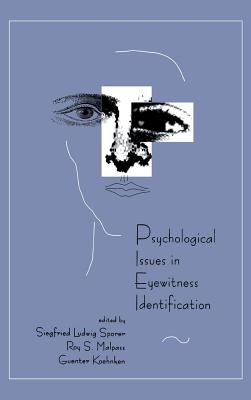
Why do police officers, investigators, prosecutors, judges, and others with an interest in eliciting accurate memory-based testimony need to inform themselves of the research literature in experimental psychology that addresses the question of witness memory? The answer is straightforward, from the perspective of a simple cost/benefit analysis. As with so many matters in the administration of public funds, effectiveness holds important rewards. Those who investigate crimes and decide which line of investigation to pursue ...
Read More
Why do police officers, investigators, prosecutors, judges, and others with an interest in eliciting accurate memory-based testimony need to inform themselves of the research literature in experimental psychology that addresses the question of witness memory? The answer is straightforward, from the perspective of a simple cost/benefit analysis. As with so many matters in the administration of public funds, effectiveness holds important rewards. Those who investigate crimes and decide which line of investigation to pursue and which line to postpone or set aside, necessarily make judgments about the likely guilt of suspects based on the information at hand. If they can make these judgments with a high degree of accuracy, everyone benefits. For many cases eyewitness identification is an important component of evidence, prosecution, and plea negotiation. If witness identification is correctly implemented, investigators and prosecutors can make their judgments effectively, and focus their resources more efficiently. A major component of effectiveness requires avoiding expending scarce resources on erroneous prosecutions. It is in everyone's interest to make the best use of the memory of witnesses: to preserve it without changing it; to render it maximally accessible; to provide an environment in which witnesses feel free to report their recollections; and to accurately assess the probable validity of the witness's report, regardless of the witness's certainty or doubts about its accuracy. This volume gathers evidence from various research domains on eyewitness testimony. Although many of the studies discussed deal with eyewitness identification, it is noteworthy that many of them also touch upon other areas of concern to eyewitness researchers, including chapters on: *voice recognition by humans and computers, with particularly detailed instructions on conducting voice "lineup," *differential aspects of recognition memory in children, *elderly eyewitness' memory, *problems of cross-racial identification, *psychological aspects of facial image reconstruction techniques, *person descriptions, *particular benefits of reinstating context as a means to improve eyewitness memory, *problems associated with various research paradigms in the eyewitness arena, and *recommendations on how to conduct lineups and photospreads and their proper evaluation. Differentiated from other literature on this topic by its non-technical language and accessibility to non-professionals, this volume covers a great deal of ground, raises a host of questions, settles some others, and points the way to more effective use and evaluation of what eyewitnesses have to say.
Read Less
Add this copy of Psychological Issues in Eyewitness Identification to cart. $52.79, new condition, Sold by Educational Media Centre rated 4.0 out of 5 stars, ships from New Delhi, DELHI, INDIA, published 1995 by Psychology Press.
Add this copy of Psychological Issues in Eyewitness Identification to cart. $70.10, new condition, Sold by Basi6 International rated 5.0 out of 5 stars, ships from Irving, TX, UNITED STATES, published 1995 by Psychology Press.
Add this copy of Psychological Issues in Eyewitness Identification to cart. $71.58, new condition, Sold by GreatBookPrices rated 4.0 out of 5 stars, ships from Columbia, MD, UNITED STATES, published 1995 by Psychology Press.
Choose your shipping method in Checkout. Costs may vary based on destination.
Seller's Description:
New. Trade paperback (US). Glued binding. 328 p. In Stock. 100% Money Back Guarantee. Brand New, Perfect Condition, allow 4-14 business days for standard shipping. To Alaska, Hawaii, U.S. protectorate, P.O. box, and APO/FPO addresses allow 4-28 business days for Standard shipping. No expedited shipping. All orders placed with expedited shipping will be cancelled. Over 3, 000, 000 happy customers.
Add this copy of Psychological Issues in Eyewitness Identification to cart. $76.39, new condition, Sold by GreatBookPricesUK5 rated 5.0 out of 5 stars, ships from Castle Donington, DERBYSHIRE, UNITED KINGDOM, published 1995 by Psychology Press.
Choose your shipping method in Checkout. Costs may vary based on destination.
Seller's Description:
New. Trade paperback (US). Glued binding. 328 p. In Stock. 100% Money Back Guarantee. Brand New, Perfect Condition, allow 4-14 business days for standard shipping. To Alaska, Hawaii, U.S. protectorate, P.O. box, and APO/FPO addresses allow 4-28 business days for Standard shipping. No expedited shipping. All orders placed with expedited shipping will be cancelled. Over 3, 000, 000 happy customers.