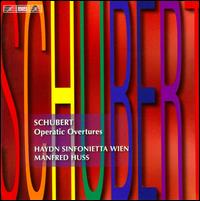
"It is astonishing," writes conductor Manfred Huss in his fine notes to this BIS release, that none of Schubert's stage works has entered the operatic repertoire, "and it is even harder to understand why not even the overtures have earned a secure place among the standard repertoire of every symphony orchestra." That may be overstating the case, but only slightly; these are gems of the (mostly) first part of Schubert's career, and any one of them could liven up a program of orchestral music. They are short sonata-form ...
Read More
"It is astonishing," writes conductor Manfred Huss in his fine notes to this BIS release, that none of Schubert's stage works has entered the operatic repertoire, "and it is even harder to understand why not even the overtures have earned a secure place among the standard repertoire of every symphony orchestra." That may be overstating the case, but only slightly; these are gems of the (mostly) first part of Schubert's career, and any one of them could liven up a program of orchestral music. They are short sonata-form movements, many of them with slow introductions that prefigure the drama in some way (and do indeed make you want to hear the operas, which are mostly small in scale and wouldn't cost that much to produce). The most interesting ones are perhaps the earliest and the latest; the overture to the unfinished Der Spiegelritter (track 2), composed in 1811 when Schubert was 14, shows in its pregnant opening octaves that the young Schubert got what was going on in Beethoven even as most of his...
Read Less