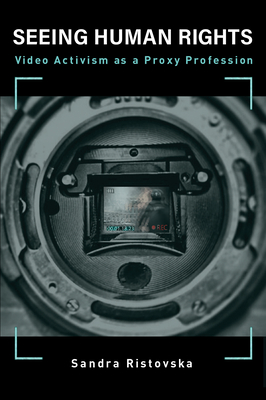
As video becomes an important tool to expose injustice, an examination of how human rights organizations are seeking to professionalize video activism. Visual imagery is at the heart of humanitarian and human rights activism, and video has become a key tool in these efforts. The Saffron Revolution in Myanmar, the Green Movement in Iran, and Black Lives Matter in the United States have all used video to expose injustice. In Seeing Human Rights , Sandra Ristovska examines how human rights organizations are seeking to ...
Read More
As video becomes an important tool to expose injustice, an examination of how human rights organizations are seeking to professionalize video activism. Visual imagery is at the heart of humanitarian and human rights activism, and video has become a key tool in these efforts. The Saffron Revolution in Myanmar, the Green Movement in Iran, and Black Lives Matter in the United States have all used video to expose injustice. In Seeing Human Rights , Sandra Ristovska examines how human rights organizations are seeking to professionalize video activism through video production, verification standards, and training. The result, she argues, is a proxy profession that uses human rights videos to tap into journalism, the law, and political advocacy. Ristovska explains that this proxy profession retains some tactical flexibility in its use of video while giving up on the more radical potential and imaginative scope of video activism as a cultural practice. Drawing on detailed analysis of legal cases and videos as well as extensive interviews with staff members of such organizations as Amnesty International, Human Rights Watch, WITNESS, the International Criminal Tribunal for the former Yugoslavia (ICTY), and the International Criminal Court (ICC), Ristovska considers the unique affordances of video and examines the unfolding relationships among journalists, human rights organizations, activists, and citizens in global crisis reporting. She offers a case study of the visual turn in the law; describes advocacy and marketing strategies; and argues that the transformation of video activism into a proxy profession privileges institutional and legal spaces over broader constituencies for public good. The open access edition of this book was made possible by generous funding from Arcadia - a charitable fund of Lisbet Rausing and Peter Baldwin.
Read Less
Add this copy of Seeing Human Rights: Video Activism as a Proxy to cart. $25.80, like new condition, Sold by spellbound rated 5.0 out of 5 stars, ships from McKeesport, PA, UNITED STATES, published 2021 by The MIT Press.
Add this copy of Seeing Human Rights: Video Activism as a Proxy to cart. $25.80, very good condition, Sold by spellbound rated 5.0 out of 5 stars, ships from McKeesport, PA, UNITED STATES, published 2021 by The MIT Press.
Choose your shipping method in Checkout. Costs may vary based on destination.
Seller's Description:
Very Good Condition-May show some limited signs of wear and may have a remainder mark. Pages and dust cover are intact and not marred by notes or highlighting.
Add this copy of Seeing Human Rights: Video Activism as a Proxy to cart. $26.28, like new condition, Sold by spellbound rated 5.0 out of 5 stars, ships from McKeesport, PA, UNITED STATES, published 2021 by The MIT Press.
Add this copy of Seeing Human Rights: Video Activism as a Proxy to cart. $26.26, very good condition, Sold by ThriftBooks-Atlanta rated 4.0 out of 5 stars, ships from Austell, GA, UNITED STATES, published 2021 by MIT Press.
Add this copy of Seeing Human Rights: Video Activism as a Proxy to cart. $62.15, good condition, Sold by Bonita rated 4.0 out of 5 stars, ships from Santa Clarita, CA, UNITED STATES, published 2021 by The MIT Press.
Add this copy of Seeing Human Rights: Video Activism as a Proxy to cart. $90.42, new condition, Sold by Just one more Chapter rated 4.0 out of 5 stars, ships from Miramar, FL, UNITED STATES, published 2021 by The MIT Press.