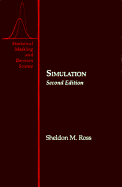
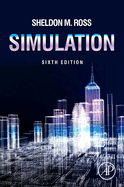
Simulation allows complex real world situations to be analyzed quantitatively. First, a model is created to represent the situation, then, using probability and statistics theory, the computer can perform a simulation to predict the outcome of this situation. This text provides a description of the generation of random variables and their use in analyzing a model in simulation study. It details how a computer may be used to generate random numbers, which may then be used to generate the behaviour of a stochastic model over ... Read More
Simulation allows complex real world situations to be analyzed quantitatively. First, a model is created to represent the situation, then, using probability and statistics theory, the computer can perform a simulation to predict the outcome of this situation. This text provides a description of the generation of random variables and their use in analyzing a model in simulation study. It details how a computer may be used to generate random numbers, which may then be used to generate the behaviour of a stochastic model over time. The statistics needed to analyze simulated data and to validate the simulation model are also presented. Read Less
Add this copy of Simulation, Second Edition: Programming Methods and to cart. $39.93, good condition, Sold by ThriftBooks-Reno rated 4.0 out of 5 stars, ships from Reno, NV, UNITED STATES, published 1996 by Academic Press.
Add this copy of Simulation, Second Edition: Programming Methods and to cart. $78.51, good condition, Sold by Bonita rated 4.0 out of 5 stars, ships from Santa Clarita, CA, UNITED STATES, published 1996 by Academic Press.