For any type of software to become standard, whether a third genera- tion language or an integrated project support environment (IPSE), it must undergo a series of modifications and updates which are a direct result of theoretical and empirical knowledge gained in the process. The database approach to the design of general purpose infonn- ation systems has undergone a series of revisions during the last twenty years which have established it as a winner in many different spheres of infonnation processing, including expert ...
Read More
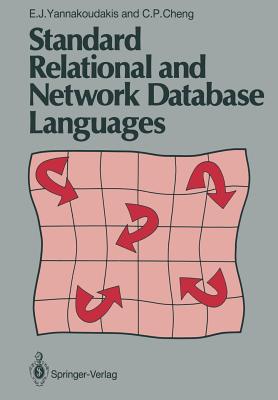
For any type of software to become standard, whether a third genera- tion language or an integrated project support environment (IPSE), it must undergo a series of modifications and updates which are a direct result of theoretical and empirical knowledge gained in the process. The database approach to the design of general purpose infonn- ation systems has undergone a series of revisions during the last twenty years which have established it as a winner in many different spheres of infonnation processing, including expert systems and real- time control. It is now widely recognised by academics and practitioners alike, that the use of a database management system (DBMS) as the under- lying software tool for the development of infonnation/knowledge based systems can lead to environments which are: (a) flexible, (b) efficient, (c) user-friendly, (d) free from duplication, and (e) fully controllable. The concept of a DBMS is now mature and has produced the software necessary to design theactual database holding the data. The database languages proposed recently by the International Organisa- tion for Standardisation (ISO) are thorough enough for the design of the necessary software compilers (i.e programs which translate the high level commands into machine language for fast execution by the computer hardware). The ISO languages adopt two basic models of data and therefore two different sets of commands: (a) the relational, implemented via the relational database language (RDL), and (b) the network, imple- mented via the network database language (NDL).
Read Less
Add this copy of Standard Relational and Network Database Languages to cart. $51.25, new condition, Sold by Educational Media Centre rated 4.0 out of 5 stars, ships from New Delhi, DELHI, INDIA, published 2012 by Springer.
Add this copy of Standard Relational and Network Database Languages to cart. $60.65, new condition, Sold by Ingram Customer Returns Center rated 5.0 out of 5 stars, ships from NV, USA, published 2012 by Springer.
Add this copy of Standard Relational and Network Database Languages to cart. $63.62, new condition, Sold by Basi6 International rated 5.0 out of 5 stars, ships from Irving, TX, UNITED STATES, published 2012 by Springer.
Add this copy of Standard Relational and Network Database Languages to cart. $87.09, good condition, Sold by Bonita rated 4.0 out of 5 stars, ships from Santa Clarita, CA, UNITED STATES, published 2012 by Springer.
Add this copy of Standard Relational and Network Database Languages to cart. $136.10, good condition, Sold by Bonita rated 4.0 out of 5 stars, ships from Santa Clarita, CA, UNITED STATES, published 1989 by Springer.
Add this copy of Standard Relational and Network Database Languages to cart. $1,204.56, fair condition, Sold by SELL BOOKS LTD rated 5.0 out of 5 stars, ships from London, LONDON, UNITED KINGDOM, published 1989 by Springer.
Choose your shipping method in Checkout. Costs may vary based on destination.
Seller's Description:
Fair. Please see the condition note after this for details, if this is missing please consider Acceptable to mean poor quality that could include major staining, water damage, writing, missing dustjacket, etc etc. Our books are dispatched from a Yorkshire former cotton mill. We list via barcode/ISBN so please note that the images are stock images and may not be the exact copy you receive, furthermore the details about edition and year might not be accurate as many publishers reuse the same ISBN for.