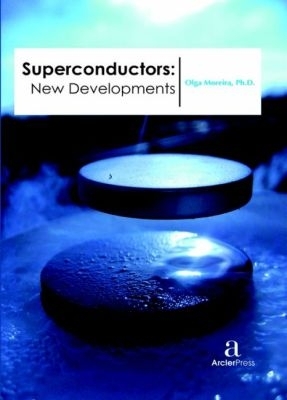
Materials can be classified in terms of how well they conduct electricity. Metals such copper and gold are good conductors of electricity while many plastics and rubbers tend to be poor conductors of electricity and are classified as insulators . Semiconductors behave similarly to insulators, but they can be induced to conduct electricity by adding impurities such as the ones used in transistors and computer chips.In 1911, Onnes discovered superconductors, materials that, at critical temperatures, are able to conduct ...
Read More
Materials can be classified in terms of how well they conduct electricity. Metals such copper and gold are good conductors of electricity while many plastics and rubbers tend to be poor conductors of electricity and are classified as insulators . Semiconductors behave similarly to insulators, but they can be induced to conduct electricity by adding impurities such as the ones used in transistors and computer chips.In 1911, Onnes discovered superconductors, materials that, at critical temperatures, are able to conduct electricity with no resistance. He was the first person to liquefy helium at temperatures as low as 1.7 kelvin (K). During his experiments, he found that the mercury sample was slowly cooled below the boiling point of liquid helium (4.2K), and its the resistance suddenly disappeared. Initially, he thought this phenomenon was an experimental artefact thus he repeated the experiments attempting to remove this artefact. All the attempts seemed to have failed until his assistant, who was responsible for controlling the temperature in the cryostat, nodded off and he the temperature began to rise, the resistance in the mercury then reappeared. Onnes finally realized the "experimental artefact" was actually a real state of the mercury when cooled below a certain critical temperature.In 1933, Meissner and Ochsenfeld discovered a related phenomenon, what has become known as the Meissner effect, which show that below the critical temperature the conductivity of a superconducting material is infinite and all magnetic field lines are expelled. This expulsion of magnetic fields from a superconductor is responsible for the incredible ability of superconductors to levitate above magnets. The Meissner effect is at the basis of magnetic levitation trains (Maglev trains) which have been proved to be an efficient and alternative solution for conventional trains. Indeed, the Japanese Maglev train holds the land speed record (for a railed vehicle) of 581 km/h. In 1956, Glover and Tinkham exposed for the first time superconductors to infrared radiation and showed the carriers in a superconductor behave as if they had an energy gap. Since superconductors are much closer to metals than to insulators, such energy gap was unexpected. In order to explain the properties that had been observed in superconductors up until that time, including this latter phenomenon, Bardeen, Cooper, and Schrieffer (BCS) developed theory which introduce the idea of a Cooper pair state. The BCS theory paved the way for the discovery of the first superconducting compounds and devices . In the 1960s, the Niobium-titanium (NbTi) superconductor was discovered, providing the first material for the manufacture of superconducting magnets. The first superconducting tunnel junction ( a Josephson junction) was also discovered during this decade, providing the means to fabricate a variety of unique electronic devices. The first applications of superconducting magnets were the MRI scans and particle accelerators. MRI scans have revolutionized medical diagnostics, allowing the detection of tumors, examination of neurological functions, and reveal disorders in joints, muscles, the heart, and the blood vessels. Large particle accelerators have allowed physicists to study the dynamics and structure of matter, space, and time by colliding opposing beams of high-energy protons inside a tunnel of several kilometers of circumference lying underground. At a smaller scale, Josephson effect also has a wide range of applications, including high-sensitivity detectors of electromagnetic radiation, magnetometers, high-speed digital circuit elements, and quantum computing circuits. For instance, the superconducting quantum interference device (SQUID) is used as ultra-sensitive probe of magnetic fields, such as those produced by electrical activity in the brain or the heart. High-speed digital circuits promised to revolutionize the information technology, thus, IBM began to invest millions
Read Less
Add this copy of Superconductors-New Developments to cart. $110.65, new condition, Sold by Basi6 International rated 5.0 out of 5 stars, ships from Irving, TX, UNITED STATES, published 2016 by Arcler Education Inc.
Add this copy of Superconductors-New Developments to cart. $110.75, new condition, Sold by Basi6 International rated 5.0 out of 5 stars, ships from Irving, TX, UNITED STATES, published 2016 by Arcler Education Inc.
Add this copy of Superconductors-New Developments to cart. $110.75, new condition, Sold by discount_scientific_books rated 5.0 out of 5 stars, ships from Sterling Heights, MI, UNITED STATES, published 2016 by Arcler Education Inc.
Add this copy of Superconductors-New Developments to cart. $90.60, new condition, Sold by Educational Media Centre rated 4.0 out of 5 stars, ships from New Delhi, DELHI, INDIA, published 2016 by Arcler Education Inc.
Add this copy of Superconductors-New Developments to cart. $91.52, new condition, Sold by Educational Media Centre rated 4.0 out of 5 stars, ships from New Delhi, DELHI, INDIA, published 2016 by Arcler Education Inc.