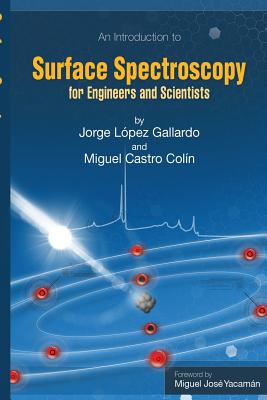
From the Preface The world of spectroscopy began its development in the second half of the XX century and has been constantly evolving ever since. From being a set of specialized techniques available only to a few, spectroscopy -in its many facets- has now become a tool chest in demand by engineers and scientists of different backgrounds. Unfortunately, the physics concepts underlying the spectroscopic techniques remain in the field of physics and most users -being from backgrounds other than physics- learn to use ...
Read More
From the Preface The world of spectroscopy began its development in the second half of the XX century and has been constantly evolving ever since. From being a set of specialized techniques available only to a few, spectroscopy -in its many facets- has now become a tool chest in demand by engineers and scientists of different backgrounds. Unfortunately, the physics concepts underlying the spectroscopic techniques remain in the field of physics and most users -being from backgrounds other than physics- learn to use commercial spectroscopy devices without ever learning much about their operational principles. In the University of Texas at El Paso, just like in many other Institutions, students from engineering and science fields come to interact with x ray fluorescence, x ray spectroscopy, Auger electron spectroscopy, to name a few, without ever taking a modern physics course that would teach them, for instance, how x rays are produced, detected or how they interact with atomic electrons. This deficiency, which can be easily remedied with a set of carefully designed lecture notes and exercises, tends to propagate into the realm of applications turning spectroscopy into an obscure subject mastered only by experts; this needs not to be the case. It is with the goal of providing the minimum physics background needed to understand spectroscopy in its more general terms that we write these lecture notes. They are aimed at an audience of science and engineering students at the senior and graduate level, and mostly composed of chemists, geologists, metallurgists, mechanical and electrical engineers and, yes, physics students, all interested in studying materials through the use of spectroscopic tools. Assuming only a background of basic classical mechanics, electricity and magnetism, and thermodynamics, these notes focus on explaining how radiation (particles and electromagnetic) interact with matter, and how this is taken advantage of to study materials through the use of spectrometers. Because of the narrowly defined audience, the book is equally limited in scope, most physics processes will be presented more from a phenomenological point of view than from a first-principles fully-theoretical approach. Students ready for more profound treatises will be directed throughout the book to other more complete sources. Designed as a teaching textbook, a large number of exercises and problems have been included to illustrate concepts and applications. Instructors are encouraged to contact the authors to obtain a complimentary file with the solutions, a test bank and powerpoint files of the chapters expanded with instructive animations and progressive presentation of the examples for in-class use. From the Foreword: One of the most important fields of modern physics is the study of surfaces, key to many important industrial applications as well as XXI century developments such as plasmonics, sensors and optical devices. L???pez Gallardo and Castro Col???n present a remarkable vision of surface science from the physicist point of view emphasizing the quantum mechanics and complementing chemistry-based books. This is a great tool for the education of graduate students of materials, nanotechnology, physics and chemistry interested in surface science. Miguel Jos??? Yacam???n Lutcher Brown Professor University of Texas at San Antonio
Read Less
Add this copy of Surface Spectroscopy: For Engineers and Scientists to cart. $16.65, new condition, Sold by Ingram Customer Returns Center rated 5.0 out of 5 stars, ships from NV, USA, published 2013 by Createspace Independent Publishing Platform.
Add this copy of Surface Spectroscopy: For Engineers and Scientists to cart. $16.32, new condition, Sold by GreatBookPrices rated 4.0 out of 5 stars, ships from Columbia, MD, UNITED STATES, published 2013 by Createspace Independent Publishing Platform.
Choose your shipping method in Checkout. Costs may vary based on destination.
Seller's Description:
New. Trade paperback (US). Glued binding. 138 p. In Stock. 100% Money Back Guarantee. Brand New, Perfect Condition, allow 4-14 business days for standard shipping. To Alaska, Hawaii, U.S. protectorate, P.O. box, and APO/FPO addresses allow 4-28 business days for Standard shipping. No expedited shipping. All orders placed with expedited shipping will be cancelled. Over 3, 000, 000 happy customers.
Add this copy of Surface Spectroscopy: for Engineers and Scientists to cart. $33.36, good condition, Sold by Bonita rated 4.0 out of 5 stars, ships from Santa Clarita, CA, UNITED STATES, published 2013 by CreateSpace Independent Publis.