Over the next decade, political and economic considerations will often cause the United States to seek coalition partners, despite its capability to act unilaterally in many circumstances. While this is nothing new, what is new is the U.S. Army's rapid modernization, relative to its allies and potential coalition partners. As part of Force XXI, the Army plans to have a digitized division by 2000, a digitized corps by the end of fiscal 2004, and the entire force digitized by 2020-2025. As the Army progresses toward these ...
Read More
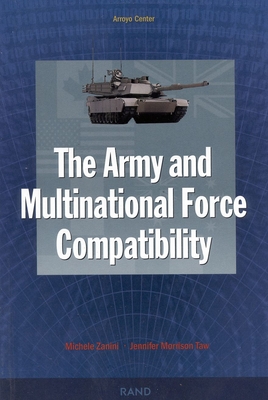
Over the next decade, political and economic considerations will often cause the United States to seek coalition partners, despite its capability to act unilaterally in many circumstances. While this is nothing new, what is new is the U.S. Army's rapid modernization, relative to its allies and potential coalition partners. As part of Force XXI, the Army plans to have a digitized division by 2000, a digitized corps by the end of fiscal 2004, and the entire force digitized by 2020-2025. As the Army progresses toward these goals, it must ensure adequate compatibility between its digitized units and the rest of the Army. The objective of this study was to determine how the Army's technological developments for Force XXI will affect multinational force compatibility, and how significantly.
Read Less
Add this copy of The Army and Multinational Force Compatibility to cart. $13.00, very good condition, Sold by Pomfret Street Books rated 5.0 out of 5 stars, ships from Carlisle, PA, UNITED STATES, published 2000 by Rand Corp.
Add this copy of The Army and Multinational Force Compatibility to cart. $15.00, very good condition, Sold by Pomfret Street Books rated 5.0 out of 5 stars, ships from Carlisle, PA, UNITED STATES, published 2000 by RAND Corporation.