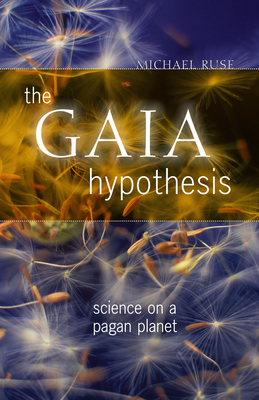
In 1965 English scientist James Lovelock had a flash of insight: the Earth is not just teeming with life; the Earth, in some sense, is life. He mulled this revolutionary idea over for several years, first with his close friend the novelist William Golding, and then in an extensive collaboration with the American scientist Lynn Margulis. In the early 1970s, he finally went public with the Gaia hypothesis, the idea that everything happens for an end: the good of planet Earth. Lovelock and Margulis were scorned by ...
Read More
In 1965 English scientist James Lovelock had a flash of insight: the Earth is not just teeming with life; the Earth, in some sense, is life. He mulled this revolutionary idea over for several years, first with his close friend the novelist William Golding, and then in an extensive collaboration with the American scientist Lynn Margulis. In the early 1970s, he finally went public with the Gaia hypothesis, the idea that everything happens for an end: the good of planet Earth. Lovelock and Margulis were scorned by professional scientists, but the general public enthusiastically embraced Lovelock and his hypothesis. People joined Gaia groups; churches had Gaia services, sometimes with new music written especially for the occasion. There was a Gaia atlas, Gaia gardening, Gaia herbs, Gaia retreats, Gaia networking, and much more. And the range of enthusiasts was--and still is--broad. In The Gaia Hypothesis , philosopher Michael Ruse, with his characteristic clarity and wit, uses Gaia and its history, its supporters and detractors, to illuminate the nature of science itself. Gaia emerged in the 1960s, a decade when authority was questioned and status and dignity stood for nothing, but its story is much older. Ruse traces Gaia's connection to Plato and a long history of goal-directed and holistic--or organicist--thinking and explains why Lovelock and Margulis's peers rejected it as pseudoscience. But Ruse also shows why the project was a success. He argues that Lovelock and Margulis should be commended for giving philosophy firm scientific basis and for provoking important scientific discussion about the world as a whole, its homeostasis or--in this age of global environmental uncertainty--its lack thereof. Melding the world of science and technology with the world of feeling, mysticism, and religion, The Gaia Hypothesis will appeal to a broad range of readers, from students and scholars of the history and philosophy of science to anyone interested in New Age culture.
Read Less
Add this copy of The Gaia Hypothesis: Science on a Pagan Planet (Science to cart. $16.46, fair condition, Sold by Midtown Scholar Bookstore rated 5.0 out of 5 stars, ships from Harrisburg, PA, UNITED STATES, published 2013 by University of Chicago Press.
Choose your shipping method in Checkout. Costs may vary based on destination.
Seller's Description:
Fair. HARDCOVER Acceptable-This is a significantly damaged book. It should be considered a reading copy only. Please order this book only if you are interested in the content and not the condition. May be ex-library. Standard-sized.
Add this copy of The Gaia Hypothesis: Science on a Pagan Planet (Science to cart. $17.02, very good condition, Sold by HPB-Emerald rated 4.0 out of 5 stars, ships from Dallas, TX, UNITED STATES, published 2013 by University of Chicago Press.
Choose your shipping method in Checkout. Costs may vary based on destination.
Seller's Description:
Very good. Connecting readers with great books since 1972! Used books may not include companion materials, and may have some shelf wear or limited writing. We ship orders daily and Customer Service is our top priority!
Add this copy of The Gaia Hypothesis: Science on a Pagan Planet (Science to cart. $19.94, good condition, Sold by Midtown Scholar Bookstore rated 5.0 out of 5 stars, ships from Harrisburg, PA, UNITED STATES, published 2013 by University of Chicago Press.
Choose your shipping method in Checkout. Costs may vary based on destination.
Seller's Description:
HARDCOVER Good-Bumped and creased book with tears to the extremities, but not affecting the text block, may have remainder mark or previous owner's name-GOOD Standard-sized.
Add this copy of The Gaia Hypothesis: Science on a Pagan Planet to cart. $20.13, good condition, Sold by Fireside Bookshop rated 5.0 out of 5 stars, ships from Stroud, GLOUCESTERSHIRE, UNITED KINGDOM, published 2013 by University of Chicago Press.
Add this copy of The Gaia Hypothesis: Science on a Pagan Planet (Science to cart. $27.00, like new condition, Sold by Sequitur Books rated 5.0 out of 5 stars, ships from Boonsboro, MD, UNITED STATES, published 2013 by University of Chicago Press.
Choose your shipping method in Checkout. Costs may vary based on destination.
Seller's Description:
Like New. Size: 139x94x13; [From the library of noted scholar William E. Connolly. ] Hardcover and dust jacket. Good binding and cover. Minor shelf wear. Clean, unmarked pages. "William E. Connolly is Krieger-Eisenhower Professor in the political science department at Hopkins where he teaches political theory. His early book, The Terms of Political Discourse, was awarded the Benjamin Lippincott Award in 1999 as 'a work of exceptional quality that is still considered significant at least 15 years after publication. ' In a poll of American political theorists published in PS in 2010, he was ranked the fourth most influential political theorist in America over the last twenty years, after Rawls, Habermas, and Foucault. His work focuses on the issues of democratic pluralism, capitalism, inequality, fascism, and bumpy intersections between capitalism and planetary amplifiers in climate change."-Johns Hopkins University.
Add this copy of The Gaia Hypothesis to cart. $29.20, new condition, Sold by Books2anywhere rated 5.0 out of 5 stars, ships from Fairford, GLOUCESTERSHIRE, UNITED KINGDOM, published 2013 by University of Chicago Press.
Choose your shipping method in Checkout. Costs may vary based on destination.
Seller's Description:
PLEASE NOTE, WE DO NOT SHIP TO DENMARK. New Book. Shipped from UK in 4 to 14 days. Established seller since 2000. Please note we cannot offer an expedited shipping service from the UK.
Add this copy of The Gaia Hypothesis Format: Hardcover to cart. $29.99, new condition, Sold by indoo rated 5.0 out of 5 stars, ships from Avenel, NJ, UNITED STATES, published 2013 by University of Chicago Press.
Add this copy of The Gaia Hypothesis to cart. $30.62, new condition, Sold by Kennys.ie rated 4.0 out of 5 stars, ships from Galway, IRELAND, published 2013 by University of Chicago Press.
Choose your shipping method in Checkout. Costs may vary based on destination.
Seller's Description:
New. In 1965 English scientist James Lovelock had a flash of insight: the Earth is not just teeming with life; the Earth, in some sense, is life. In this book, the author uses Gaia and its history, its supporters and detractors, to illuminate the nature of science itself. Series: science. culture. Num Pages: 288 pages, 15 halftones, 5 line drawings. BIC Classification: PDA; RB. Category: (G) General (US: Trade). Dimension: 224 x 140 x 22. Weight in Grams: 438. 2013. Hardcover.....We ship daily from our Bookshop.