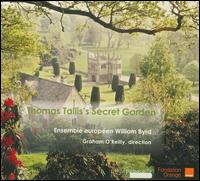
Australian conductor Graham O'Reilly founded Ensemble européen William Byrd in France in 1990 to perform Thomas Tallis' 40-part motet, Spem in alium, and the group has gone on to specialize in the music of the Renaissance and Baroque, with emphasis on 17th century repertoire. This album is a fascinating demonstration of the variety of styles Tallis adopted in his Latin sacred music during the reigns of the monarchs (Henry VII, Edward VI, Mary I, and Elizabeth I) who ruled during his career. Not surprisingly, he produced ...
Read More
Australian conductor Graham O'Reilly founded Ensemble européen William Byrd in France in 1990 to perform Thomas Tallis' 40-part motet, Spem in alium, and the group has gone on to specialize in the music of the Renaissance and Baroque, with emphasis on 17th century repertoire. This album is a fascinating demonstration of the variety of styles Tallis adopted in his Latin sacred music during the reigns of the monarchs (Henry VII, Edward VI, Mary I, and Elizabeth I) who ruled during his career. Not surprisingly, he produced most of his Latin liturgical music during Henry's reign, before it became apparent that the Anglican schism would necessarily result in a repudiation of the culture as well as the authority of Rome, and during Mary's reign, when the church was again supportive of majestic and elaborate polyphony. The 17-minute Marian antiphon, Gaude gloriosa Dei Mater, which Tallis may have written for Mary's coronation in 1553, is an extravagantly melismatic, dense contrapuntal thicket that requires...
Read Less