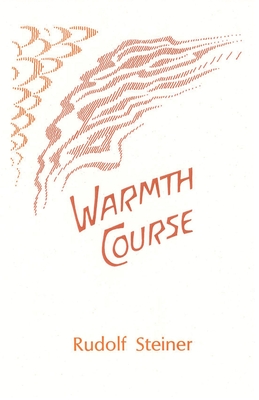
The Theory of Heat; Second Scientific Course; 14 lectures, Stuttgart, March 1-14, 1920 (CW 321) Following his first scientific course the previous year ( The Light Course ), in these lectures Rudolf Steiner discusses the nature of warmth, its relationship to the four states of matter, to light, to color, and to the subearthly and superearthly realms. He extends the modern ideas of physics through aspects of understanding achieved by spiritual science. With extensive notes and diagrams, this work comprises essential ...
Read More
The Theory of Heat; Second Scientific Course; 14 lectures, Stuttgart, March 1-14, 1920 (CW 321) Following his first scientific course the previous year ( The Light Course ), in these lectures Rudolf Steiner discusses the nature of warmth, its relationship to the four states of matter, to light, to color, and to the subearthly and superearthly realms. He extends the modern ideas of physics through aspects of understanding achieved by spiritual science. With extensive notes and diagrams, this work comprises essential reference material for natural science teachers, as well as interested parents and anyone wanting a deeper understanding of a theory of heat and warmth based on spiriual science. "The manifold new aspects of the subject presented placed the element of warmth within the great evolution of the cosmos and then traced it even into the phenomena of life, the concrete processes in the transformation of the states of aggregation in matter, and even into mathematical formulae.... Indications thus given were then worked out during the following years in the Research Institute and Laboratory at the Goetheanum and traced into numerous phenomena of the rhythms of the day and the year, phenomena of life, the most subtle influences in processes of crystallization, and they became useful in the later inaugurated agricultural work." -- Guenther Wachsmuth , The Life and Work of Rudolf Steiner (p. 378) This volume is a translation from German of Geisteswissenschaftliche Impulse II zur Entwickelung der Physik II: Zweiter naturwissenschaftlicher Kurs: Die W???rme auf der Grenze positiver und negativer Materialit???t (GA 321).
Read Less
Add this copy of Warmth Course: The Theory of Heat: Second Scientific to cart. $27.81, new condition, Sold by GreatBookPricesUK5 rated 5.0 out of 5 stars, ships from Castle Donington, DERBYSHIRE, UNITED KINGDOM, published 1995 by Mercury Press (Canada).
Choose your shipping method in Checkout. Costs may vary based on destination.
Seller's Description:
New. Trade paperback (US). Glued binding. 214 p. Mercury Press. In Stock. 100% Money Back Guarantee. Brand New, Perfect Condition, allow 4-14 business days for standard shipping. To Alaska, Hawaii, U.S. protectorate, P.O. box, and APO/FPO addresses allow 4-28 business days for Standard shipping. No expedited shipping. All orders placed with expedited shipping will be cancelled. Over 3, 000, 000 happy customers.
Add this copy of Warmth Course to cart. $27.82, new condition, Sold by Books2anywhere rated 5.0 out of 5 stars, ships from Fairford, GLOUCESTERSHIRE, UNITED KINGDOM, published 1995 by Mercury Press (Canada).
Choose your shipping method in Checkout. Costs may vary based on destination.
Seller's Description:
PLEASE NOTE, WE DO NOT SHIP TO DENMARK. New Book. Shipped from UK in 4 to 14 days. Established seller since 2000. Please note we cannot offer an expedited shipping service from the UK.
Add this copy of Warmth Course: The Theory of Heat: Second Scientific to cart. $27.41, new condition, Sold by Ingram Customer Returns Center rated 5.0 out of 5 stars, ships from NV, USA, published 1995 by Mercury Press (Canada).
Add this copy of Warmth Course: the Theory of Heat: Second Scientific to cart. $52.71, good condition, Sold by Bonita rated 4.0 out of 5 stars, ships from Santa Clarita, CA, UNITED STATES, published 1995 by Mercury Press.
Add this copy of Warmth Course: the Theory of Heat: Second Scientific to cart. $78.60, new condition, Sold by Bonita rated 4.0 out of 5 stars, ships from Santa Clarita, CA, UNITED STATES, published 1995 by Mercury Press.