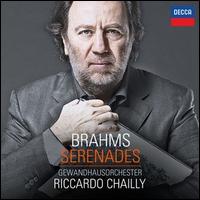
Recordings of Brahms' two serenades from the late 1850s are sparse compared with those of the symphonies, perhaps because they're sometimes depicted as preparatory exercises for the mighty four. But they're really not that; they're light works that stand on their own, imbued with the spirit of Classicism, especially that of Haydn, and anyone who loves Brahms knows that his light works are no less profound than his weighty ones. The Serenade No. 1 in D major, Op. 11, is in six movements; the Serenade No. 2 in A major, Op. 16 ...
Read More
Recordings of Brahms' two serenades from the late 1850s are sparse compared with those of the symphonies, perhaps because they're sometimes depicted as preparatory exercises for the mighty four. But they're really not that; they're light works that stand on their own, imbued with the spirit of Classicism, especially that of Haydn, and anyone who loves Brahms knows that his light works are no less profound than his weighty ones. The Serenade No. 1 in D major, Op. 11, is in six movements; the Serenade No. 2 in A major, Op. 16, in five, with each containing both a scherzo and a minuet. That little contrast is key to both the elegance of craft in these works and to the beauty of the readings here by conductor Riccardo Chailly, leading the venerable Gewandhaus Orchestra of Leipzig. Nowhere does Chailly try to push these works toward the Symphony No. 1 in C minor, Op. 68, or even the contemporaneous Piano Concerto No. 1 in D minor, Op. 15. Instead he takes them as they are, making them as transparent as...
Read Less
Add this copy of Brahms: Serenades to cart. $20.03, Sold by New England Booksellers rated 3.0 out of 5 stars, ships from Greenfield, MA, UNITED STATES, published 2015 by Decca.