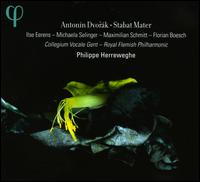
Veteran historical-performance conductor Philippe Herreweghe and his Collegium Vocale Gent might seem a questionable choice for Antonín Dvorák's lushly Romantic Stabat Mater. And the booklet essay, which assigns the motivation for the work to Dvorák's 1870s employment at a church that favored pure Palestrina choral style, may further lead you to expect (or fear) a radically stripped-down reading of the work. But actually Herreweghe, like other performers who came of age in the historical-performance movement, has been ...
Read More
Veteran historical-performance conductor Philippe Herreweghe and his Collegium Vocale Gent might seem a questionable choice for Antonín Dvorák's lushly Romantic Stabat Mater. And the booklet essay, which assigns the motivation for the work to Dvorák's 1870s employment at a church that favored pure Palestrina choral style, may further lead you to expect (or fear) a radically stripped-down reading of the work. But actually Herreweghe, like other performers who came of age in the historical-performance movement, has been moving into mainstream repertory, and his interpretation here, while not exactly possessing an intense subjectivity, is well within the mainstream. It's a bit deliberate in the tempos and tends to emphasize the work's roots in church music, but it is in no way chilly, and there's an X factor that comes from the performers' clear enthusiasm for the music. Herreweghe employs a choir of about 60 singers, a far cry from the 840 that performed the work in London, and more monumental...
Read Less
Add this copy of Dvorák: Stabat Mater to cart. $17.90, fair condition, Sold by New England Booksellers rated 3.0 out of 5 stars, ships from Greenfield, MA, UNITED STATES, published 2013 by Out Here Records.