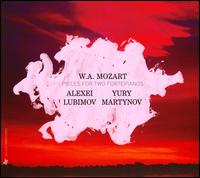
One way to look at Mozart's keyboard music is to consider the fortepiano as basically an extension of the harpsichord, with the music increasingly but only incrementally making use of the new instrument's additional capabilities. Another outlook, less common but perhaps gaining ground, is that the piano marked a stark break from the earlier sound concept. This recording by Russian pianists Alexei Lubimov and Yury Martynov -- a contemporary music specialist and a historically oriented performer, which is an unusual ...
Read More
One way to look at Mozart's keyboard music is to consider the fortepiano as basically an extension of the harpsichord, with the music increasingly but only incrementally making use of the new instrument's additional capabilities. Another outlook, less common but perhaps gaining ground, is that the piano marked a stark break from the earlier sound concept. This recording by Russian pianists Alexei Lubimov and Yury Martynov -- a contemporary music specialist and a historically oriented performer, which is an unusual combination in itself -- marks an extreme version of the latter view. Using a pair of period instruments by unspecified makers, Lubimov and Martynov offer Mozart's slender output of music for two pianos (strangely, he left several pieces in this medium unfinished for no good reason), augmented by an arrangement of the Piano Quartet in E flat major, K. 493, by one Johann Pratsch. Lubimov and Martynov don't exploit the dynamic range of the fortepiano so much as its range of articulation, which...
Read Less
Add this copy of Mozart: Pieces for Two Pianos to cart. $29.71, Sold by New England Booksellers rated 3.0 out of 5 stars, ships from Greenfield, MA, UNITED STATES, published 2013 by Zig Zag Territoires.